January 13, 2026 · Gary Williams
When Everything Is Important, Clarity Disappears
Luxury used to mean more. More space, more amenities, more options, more polish. And when digital entered hospitality, we kept the habit. With good intentions, of course. Each new promotional piece, page, microsite, or popup promised clarity, efficiency, or insight—and often delivered it in isolation. Over time, the accumulation began to work against us. In an industry built on ease and anticipation, clarity has quietly become rare. And that rarity is exactly what makes it luxurious.
As hospitality expanded its promise, clarity became harder to maintain. Destinations no longer serve a single traveler—they now offer something for the entire family, across ages, interests, and moments. Events no longer sell tickets alone; they sell identity, community, and lifestyle. With that expansion came an understandable urge to measure and optimize every channel, every touchpoint, every interaction. Nothing was added without reason. It just became harder to say no. As offerings multiplied, so did the surfaces demanding attention—and clarity began to thin.
At some point, clarity didn’t disappear. It was crowded out. Every audience needed to be addressed. The result wasn’t more hospitality—it was more noise. I’ll bet you’ve had the argument more than once about what appears on your main menu or on your homepage with a department head.

True Luxury
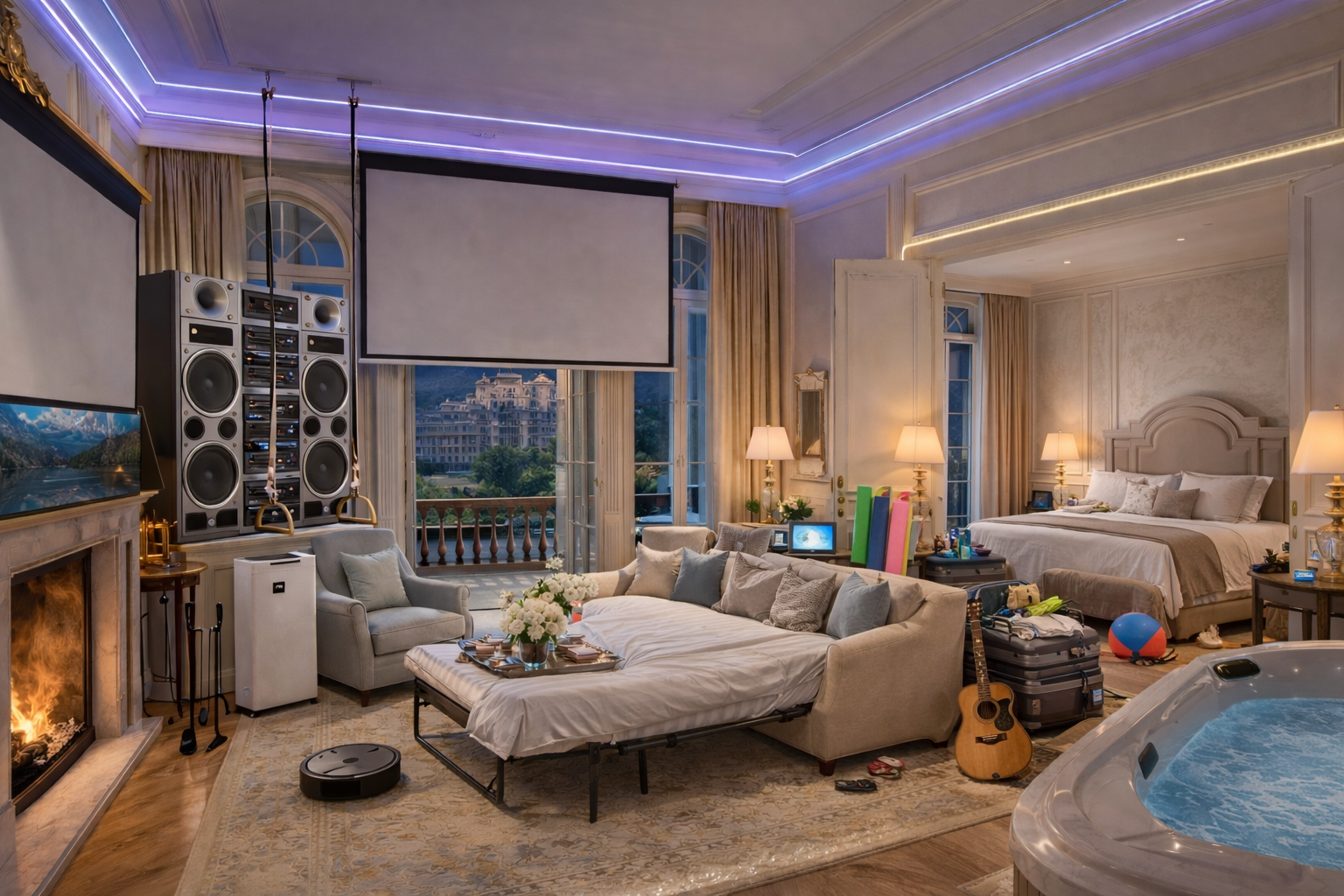
Truly Too Much
When every offering expands and every channel matters, effort quietly replaces clarity. Localization multiplies that effort exponentially—by market, language, season, property, audience, and context. Teams begin to compensate, not because anything is broken, but because nothing is clearly finished. Content grows heavier as it tries to serve more guests in more places at once. Meetings multiply to align decisions that systems no longer hold. The work increases, not because hospitality has lost its craft, but because the structure meant to carry that craft has thinned.
There’s a well-known Russian proverb:
If you chase two rabbits, you will lose them both
Hospitality has always understood this intuitively in physical space. The best lobbies, restaurants, and guest experiences aren’t defined by how much they include, but by how deliberately they focus. Somewhere along the way, our digital systems forgot that lesson.
Breaking free doesn’t require offering less. It requires deciding what must remain clear. Clarity comes from restraint: defining what stays consistent, what is allowed to adapt, and what doesn’t belong at all. When technology is designed to carry that intent—to absorb complexity instead of amplifying it—it stops demanding attention. It becomes infrastructure.
For developers in this industry this is the real opportunity ahead. The systems behind hospitality should mirror the sensation we want guests to feel. Calm instead of clutter. Guidance instead of overload. Confidence instead of constant choice. When platforms are designed around clarity, teams regain focus and guests regain ease. The experience feels considered and intentional rather than crowded.
Clarity doesn’t announce itself. It creates space—for enjoyment, for trust, for presence. And in a world where everything is competing to be seen, that restraint may be the most luxurious framework hospitality can offer.